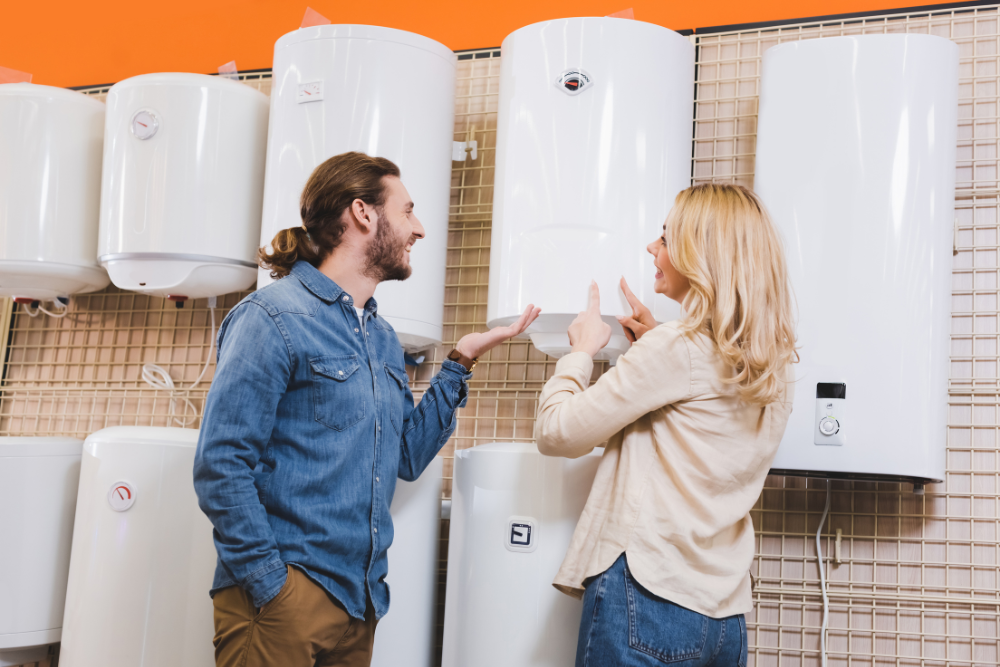
The first step to choosing the right system for your home is knowing the types of water heaters available today. Most homes rely on either a traditional tank system or a modern tankless unit, and each one works differently. A tank heater stores a large amount of water and keeps it warm inside an insulated tank. A tankless heater warms water instantly as it moves through the system, giving you hot water on demand. These are the two main categories used in homes across the country, and understanding them makes it easier to match a system to your household’s needs.
Both options fall under the different types of water heaters you’ll see in most homes, and each one has its own strengths. Tank heaters offer a ready supply of hot water and a lower upfront cost, while tankless models provide continuous hot water and better long-term efficiency. When homeowners compare systems, they often look at energy use, lifespan, and performance; topics that come up often in water heater comparisons.
This guide explains exactly how these two systems work, what their daily performance looks like, and how they differ in real-world use. By the time you explore our breakdown of tankless vs tank water heater options, you’ll have a clear idea of which system fits your hot-water habits, your home’s layout, and your long-term goals. Understanding the two main types of water heaters helps you make confident decisions when it’s time to repair, replace, or upgrade.
Why It Helps to Understand Your Water Heater Options
Choosing between the types of water heaters isn’t just about picking a new appliance; it affects your energy use, the time it takes to get hot water, and how long your system lasts. Some homeowners want the fastest recovery time; others want the lowest energy bills; others simply want something dependable and low-maintenance. Knowing the different types of water heaters lets you compare benefits and drawbacks clearly.
That’s where water heater comparisons become helpful. Instead of guessing, you can see how tank and tankless systems differ in performance, cost, and lifespan. Once you understand the basics, the choice becomes much simpler.
How Traditional Tank Water Heaters Work
The first of the types of water heaters most homeowners are familiar with is the traditional tank model. These heaters store anywhere from 30 to 80 gallons of water inside an insulated tank. The system heats the entire supply and keeps it warm until someone opens a faucet.
Here’s the simple breakdown:
- Cold water enters through a dip tube.
- The burner or electric element heats the water.
- Heated water rises to the top of the tank.
- Hot water exits when a fixture is turned on.
Understanding this helps clarify why a tank can run out of hot water. When the supply is used faster than the tank can reheat, you’ll have to wait for recovery. In many water heater comparisons, tank systems are known for:
- Lower upfront cost
- Shorter installation time
- Reliable performance
- Steady supply for small to medium-sized households
But tank heaters also use more energy because they reheat water even when no one is using it. This is called “standby heat loss”, and it’s one of the key topics in tankless vs tank water heater discussions.
How Tankless Water Heaters Work
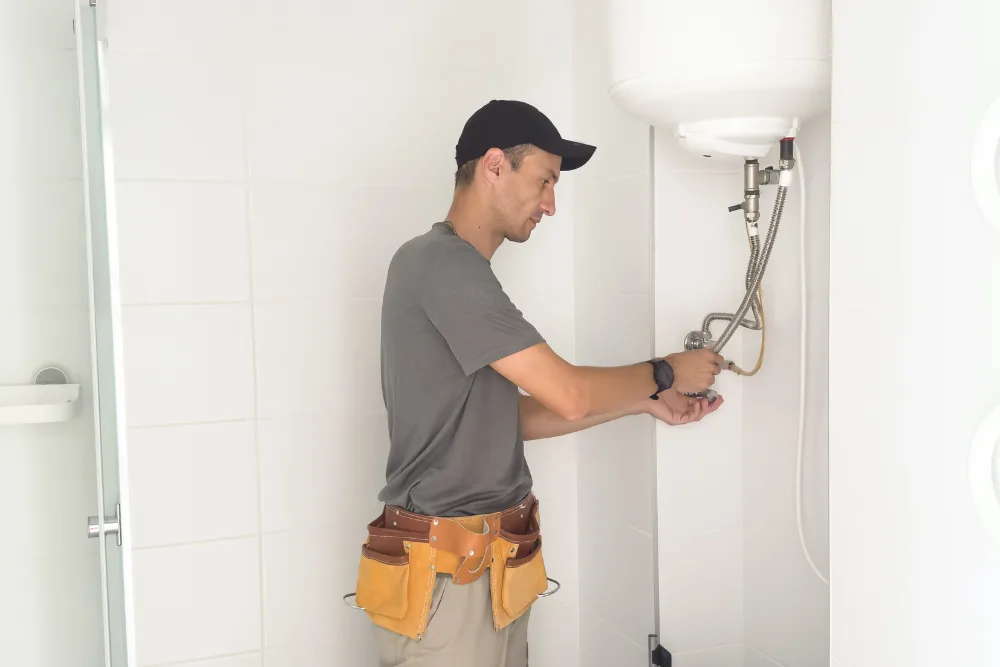
The second major category in the types of water heaters is the tankless model. Instead of storing water, these units heat water on demand. They use powerful burners or electric coils to warm water as it moves through the system, so the hot water never “runs out.”
Here’s the basic process:
- You turn on a hot-water faucet.
- Cold water flows through the tankless unit.
- The heat exchanger warms the water instantly.
- Hot water flows directly to your fixture.
Tankless systems excel in many water heater comparisons, especially in homes with high usage or long back-to-back showers. They are often highlighted in tank vs tankless water heater debates because they address one of the biggest homeowner complaints: running out of hot water.
Advantages include:
- Endless hot water
- Long lifespan
- Lower ongoing energy use
- Compact design
However, tankless heaters usually require a higher upfront investment and sometimes upgrades to gas lines or electrical panels. Still, many homeowners choose them for long-term efficiency and convenience.
Tank vs Tankless Water Heater: A Side-by-Side Look
When homeowners request water heater comparisons, they usually want simple, real-world differences. Here’s how these two types of water heaters compare in areas that actually matter to families.
1. Hot Water Supply
Tank systems store a fixed amount. When it’s gone, you wait.
Tankless systems heat water on demand, so supply doesn’t run out.
2. Energy Use
Tank systems maintain heat around the clock.
Tankless units use energy only when you turn on hot water.
3. Lifespan
Tank heaters last 8–12 years.
Tankless heaters last 15–20 years or more.
4. Space Requirements
Tank units take up more floor space.
Tankless units mount on the wall and free up space.
5. Upfront Cost
Tank systems are less expensive initially.
Tankless systems cost more upfront but save energy long-term.
These are the reasons many families find themselves comparing tankless vs tank water heater options when planning a replacement.
Which Water Heater Is Best for Your Home?
Picking between the types of water heaters depends on your home’s layout, number of residents, daily habits, and budget. Several factors can help guide the choice:
Choose a traditional tank heater if:
- You want the lowest upfront cost
- Your hot water usage is moderate
- You need a straightforward, fast replacement
- Your home has older plumbing that might not support a tankless upgrade
Choose a tankless heater if:
- You want continuous hot water
- You prefer higher energy efficiency
- Your family takes long back-to-back showers
- You plan to stay in your home long enough to see long-term savings
Both types of water heaters can be excellent, depending on your needs. Over Under Plumbing helps homeowners choose the right model by considering usage patterns, installation requirements, and long-term performance.
The Costs Associated With Different Water Heater Types
When comparing the types of water heaters, cost is often the biggest deciding factor. A traditional tank costs less upfront, and installation is usually simpler. A tankless system requires more investment but saves money over time by using less energy.
Think of it as short-term versus long-term value:
- Tank = Lower upfront cost, higher monthly costs
- Tankless = Higher upfront cost, lower monthly costs
These water heater comparisons can help homeowners see past the price tag and consider the full picture.
Maintenance Differences Between Water Heater Types
Both types of water heaters require maintenance, but not in the same way. Traditional tanks need yearly flushing to remove sediment buildup that slows performance. The anode rod needs inspection and replacement to protect the tank from corrosion.
Tankless heaters also need descaling, especially in areas with hard water, but the process is generally simpler and helps the unit maintain top performance. Learning these differences gives you a clearer picture of what owning each system looks like.
How Choosing the Right Water Heater Protects Your Home
When you fully understand the types of water heaters, it becomes easier to make decisions that protect your home from unexpected breakdowns. A properly sized and installed heater helps you avoid cold showers, temperature swings, and early system failure. More importantly, choosing a model that matches your daily routines ensures comfort for years to come.
If you ever feel unsure about choosing between the types of water heaters, Over Under Plumbing is ready to guide you through the process. Our licensed professionals help homeowners pick the right system, install it correctly, and keep it running smoothly.

Talk to Over Under Plumbing for Expert Water Heater Help
Now that you understand the main types of water heaters, you can make a confident decision about what’s best for your home. If you need help choosing, installing, or repairing your system, Over Under Plumbing is here to assist. Contact our team anytime for expert advice and dependable service.
Frequently Asked Questions
What are the main types of water heaters available today?
The two most common types are traditional tank heaters and modern tankless models. Tank heaters store hot water in a large insulated tank, while tankless units heat water only when it’s needed. Understanding the different types of water heaters helps you choose a system based on your energy use, space, and household size.
Which type of water heater lasts longer?
Tankless heaters generally last longer, often 15 to 20 years, compared to tank heaters, which typically last 8 to 12 years. This difference is a major point in many water heater comparisons, especially for homeowners who want long-term reliability. Tankless units have fewer components exposed to standing water, which reduces wear.
Do tankless water heaters provide better energy efficiency?
Yes. Because tankless heaters warm water only when you turn on a hot-water tap, they use less energy overall. This is one of the biggest benefits in a tank vs tankless water heater decision. Tank systems heat water continuously, even when it’s not in use, which increases energy consumption.
What size water heater do I need?
The right size depends on household size and daily usage. Small families may be fine with a 40-gallon tank, while larger homes might need a 50- or 80-gallon tank. Tankless systems are sized based on flow rate: how many fixtures you want running at once. A professional can help compare the types of water heaters to match your home’s needs.
How do I know when it’s time to replace my water heater?
Common signs include inconsistent water temperature, rumbling sounds, cloudy or rusty water, or leaks near the unit. In many tankless vs tank water heater situations, a failing tank system often signals it’s time to consider upgrading to tankless. A plumber can inspect the system and suggest the best replacement option.